
Say what? Porangatu?! You never heard of it?
It is a city of about 45,000 people located a 6-hour bus ride north of Brasilia and about 1 hour south of the Goiás-Tocatins border.
Like much of the interior of Brazil, its economy centers around agriculture.
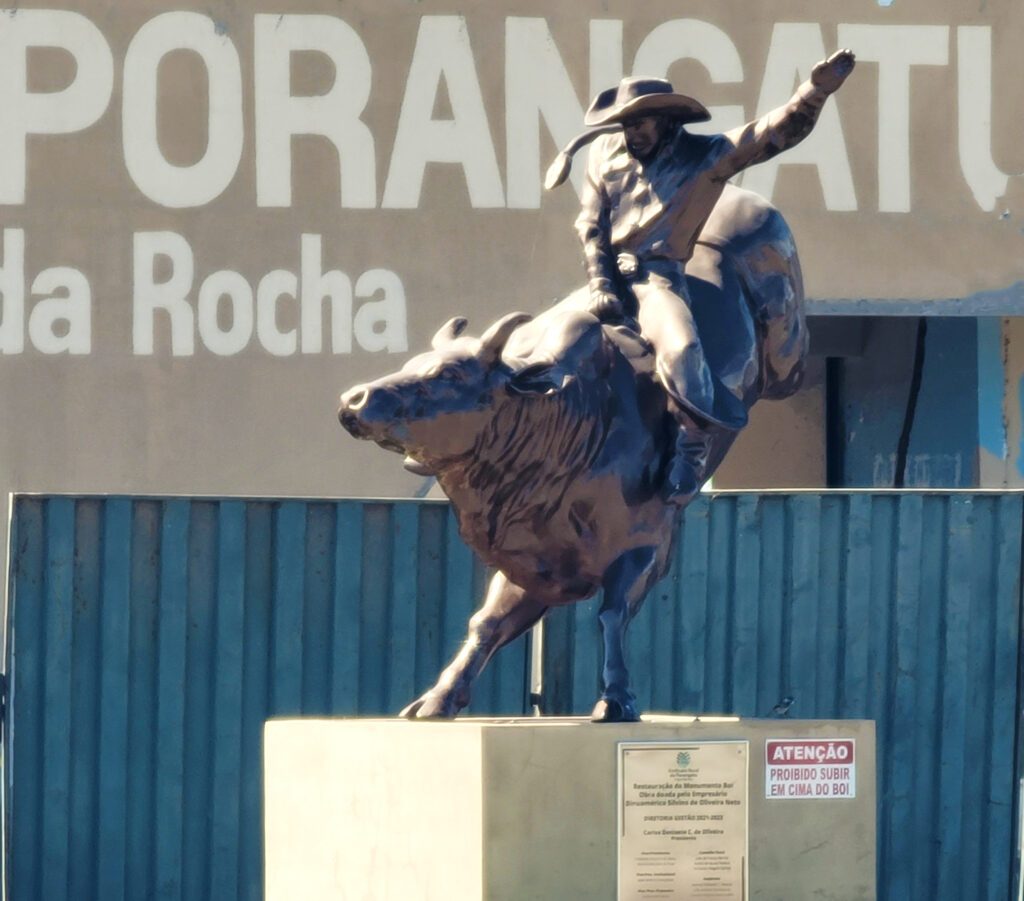
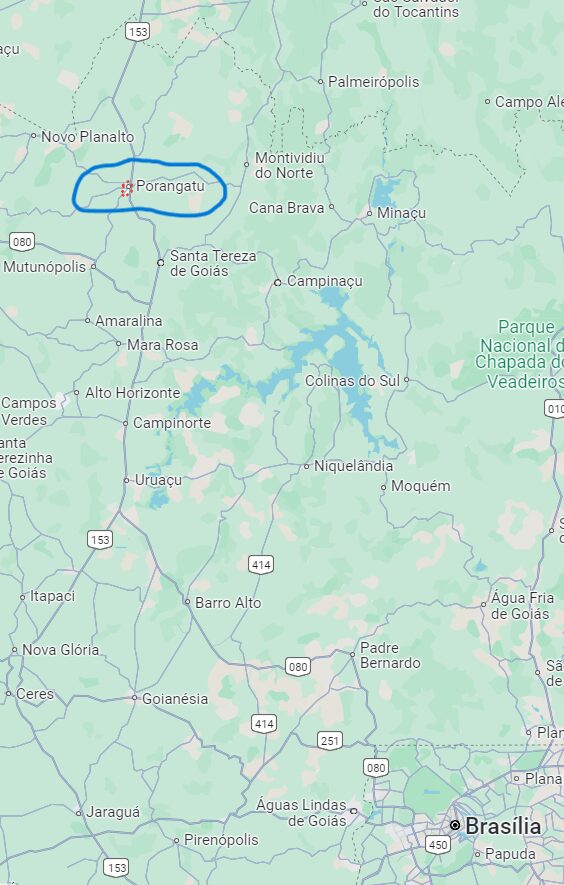
I lived in Porangatu in 1999 and 2000. Even if I did not know people there, there are three reasons I would visit it when I go to Brazil.
1. The Nature
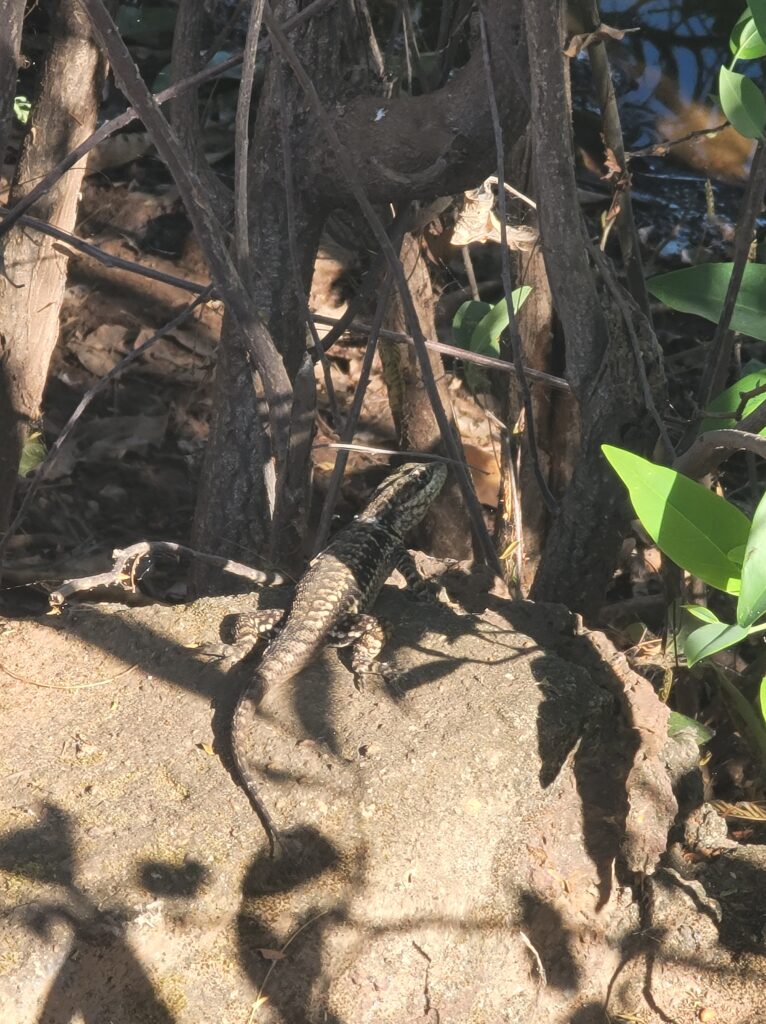
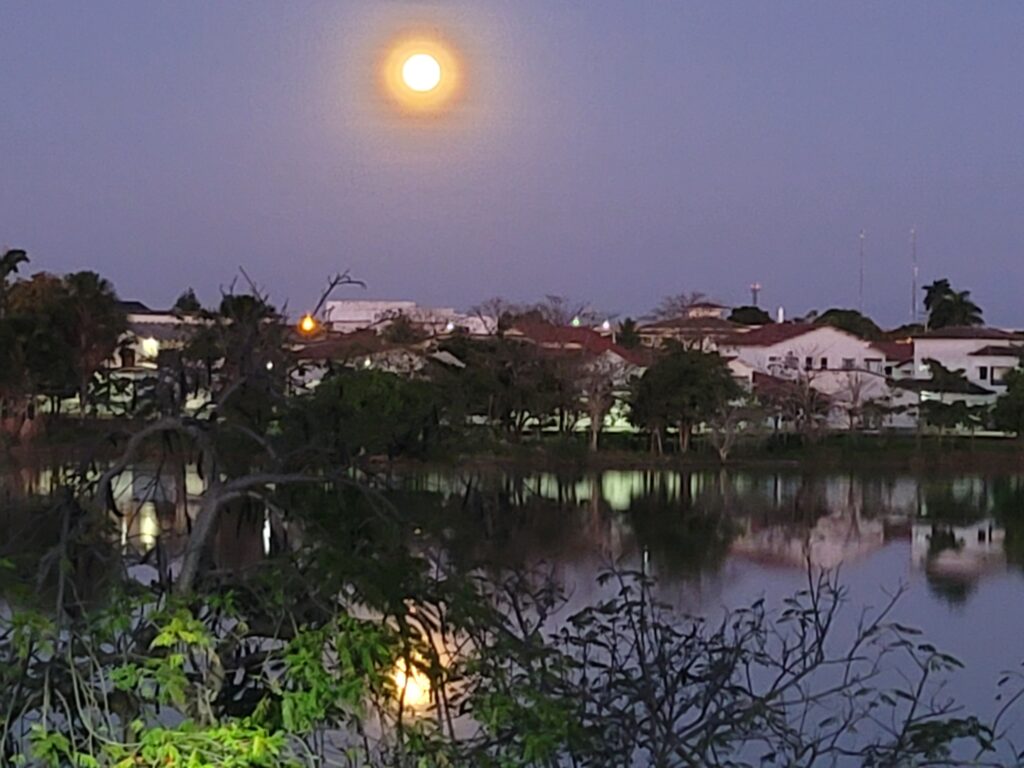
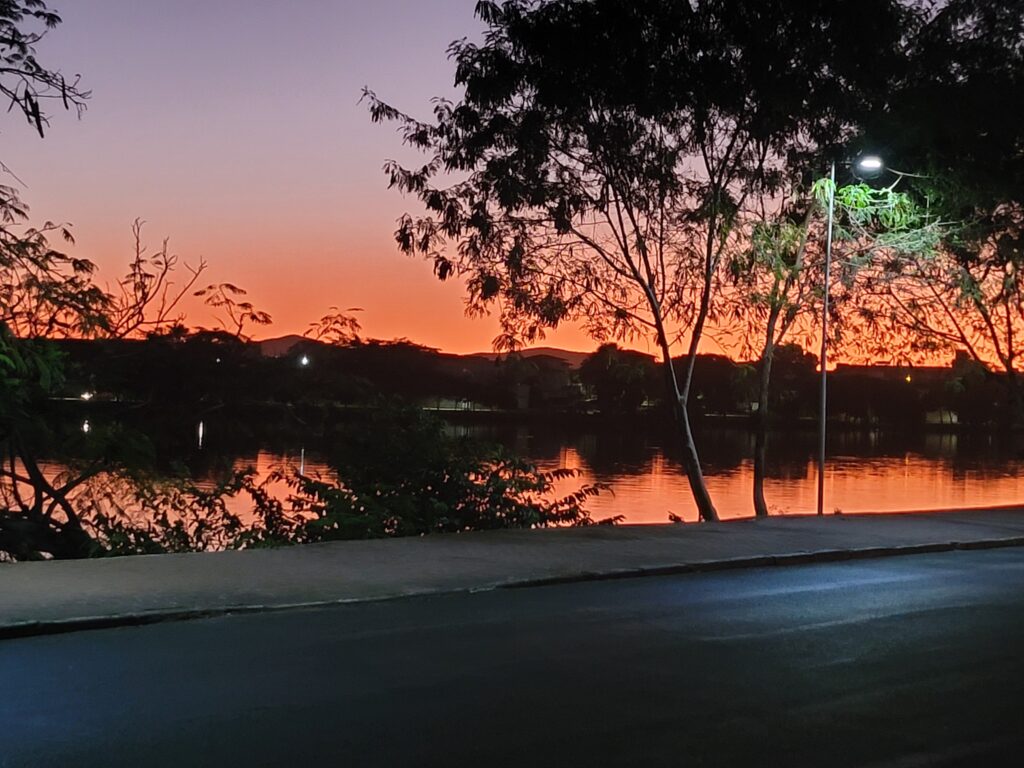
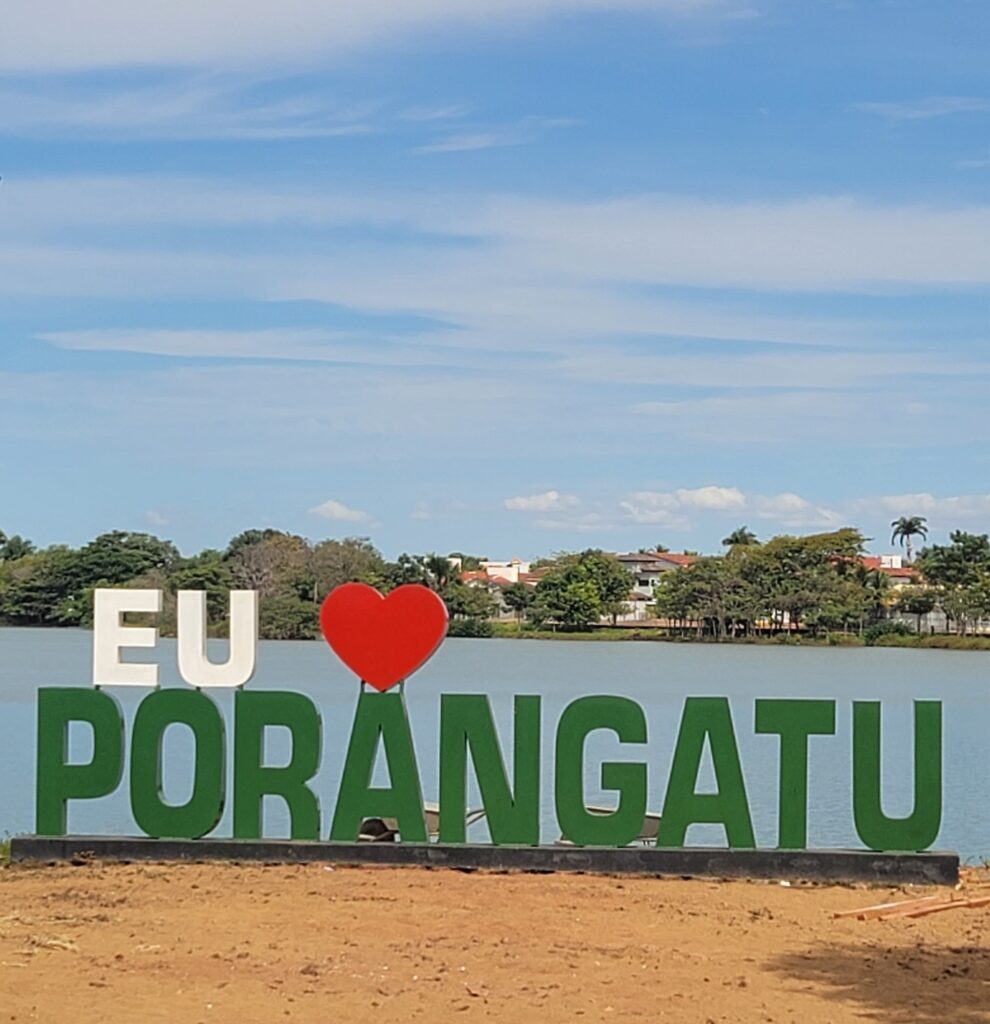
Porangatu is an excellent place to see tropical wildlife and vegetation up close. That’s especially true because there is a lake (Lagoa Grande) in the middle of the city.
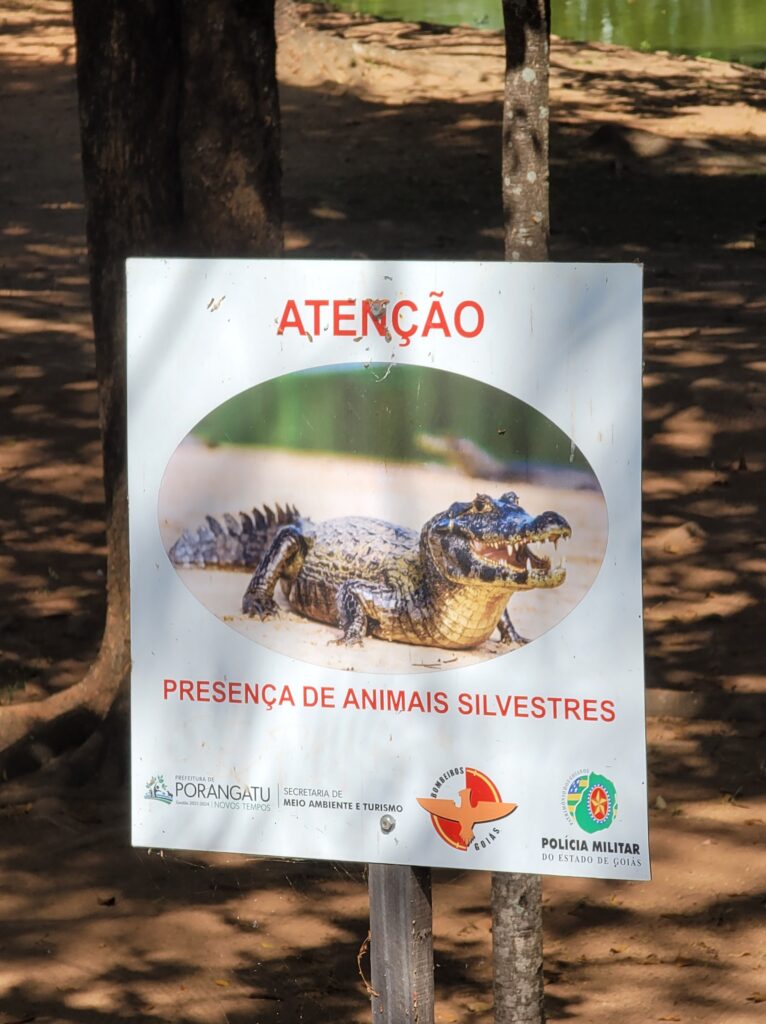
Actually, that is less true than when I lived there. I heard that the city culled the number of capybara as they were concerned they could spread COVID. I also understand that the number of alligators in the lake has been drastically reduced because an alligator bit off the arm of a young boy.
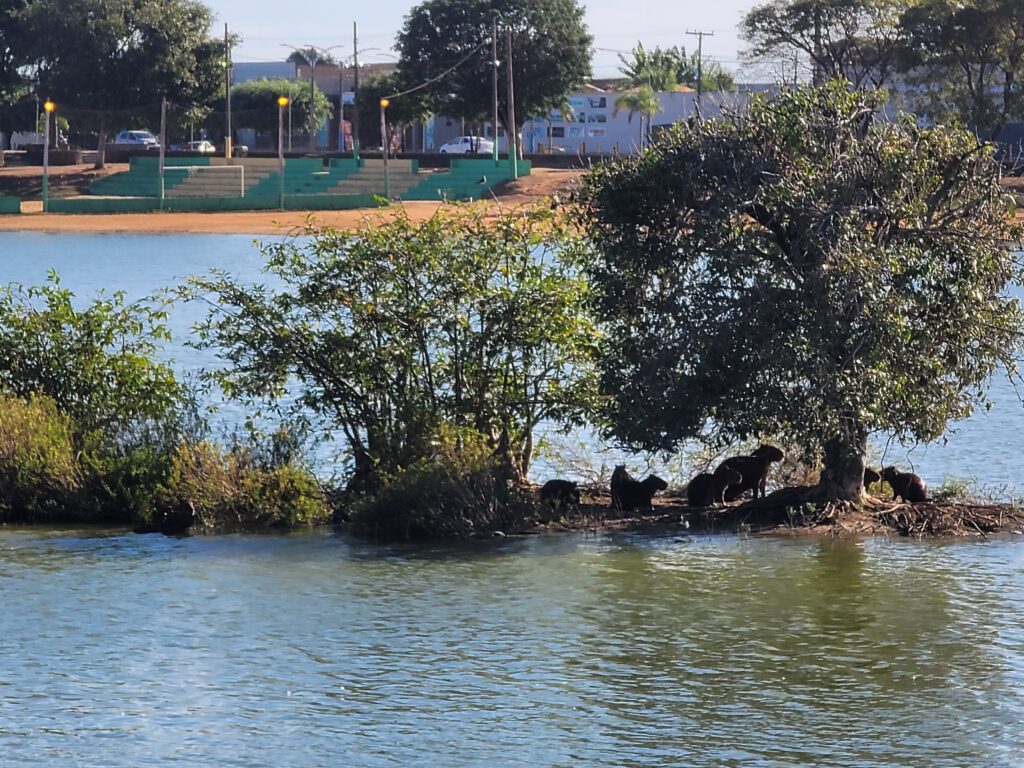
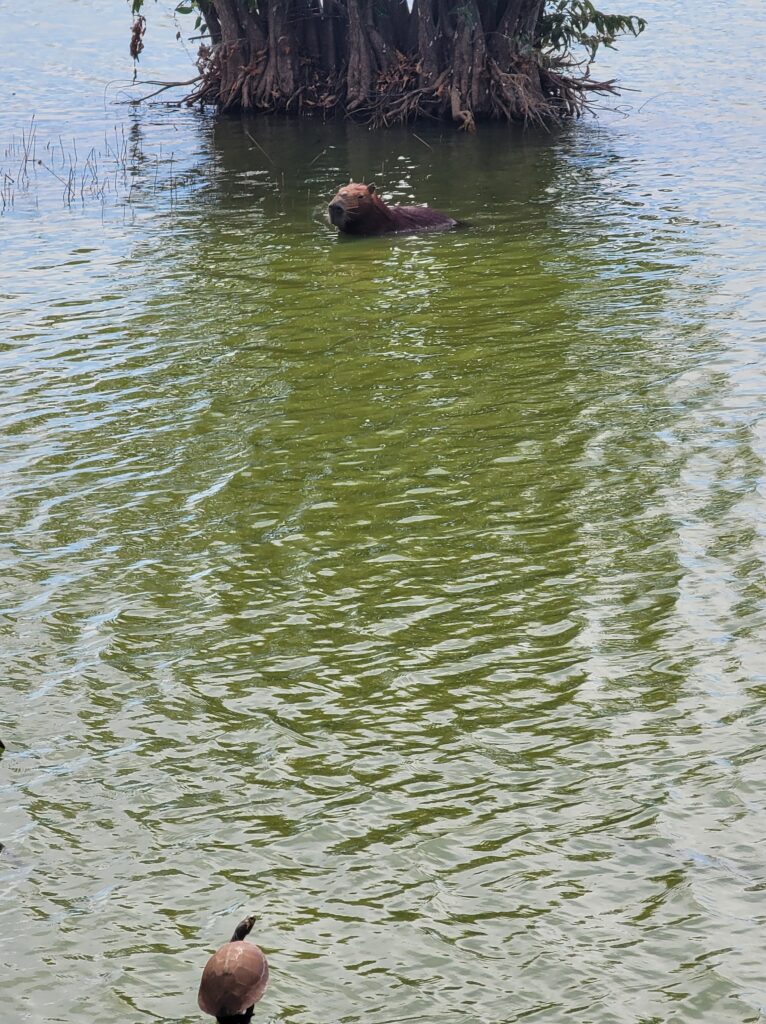
Capybaras are the largest rodents in the world. When I visited Porangatu early 2020, it was not unusual to see them roaming the street near the lake. The picture below is from 2020.
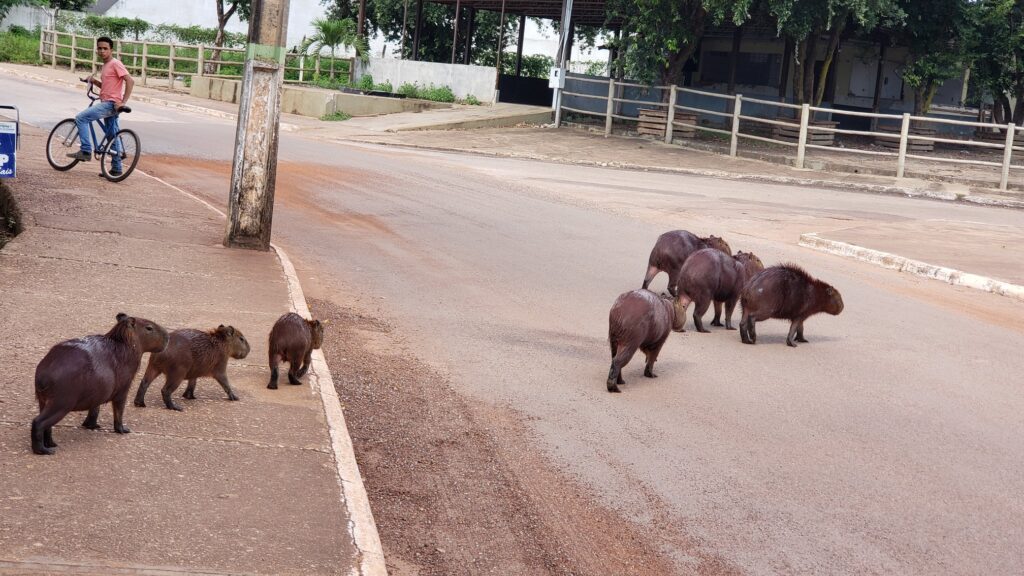
However, when I visited Porangatu in 2023, almost all of them were living on islands in the lake. They are excellent swimmers.
When I lived in Porangatu, the nightlife centered on bars that bordered the lake. I often saw the eyes of alligators looking at bar patrons. I was surprised that I never heard of anyone overdrinking, falling in the water, and being attacked by them.
During the day, my dogs would see them looking at us and go wild barking at them.
On this trip, I only saw an alligator once. Given the child who lost his arm, the reduction could not have happened soon enough.

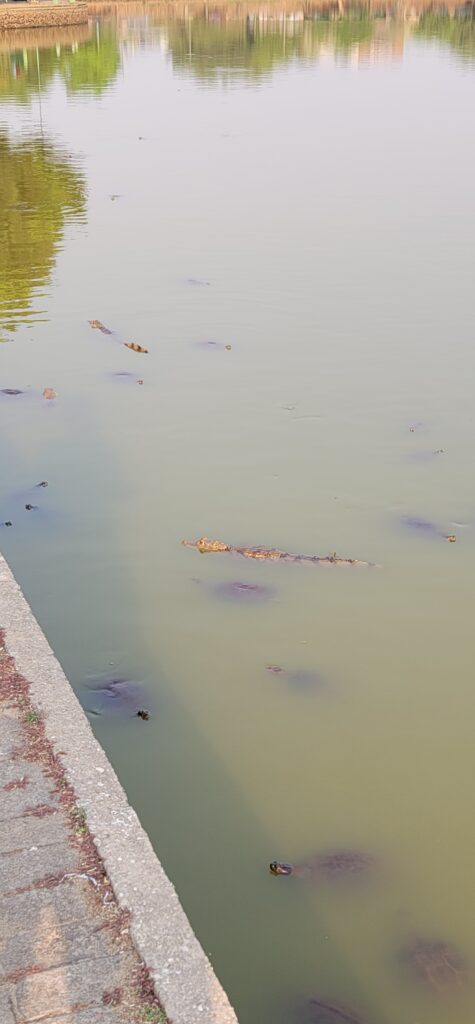
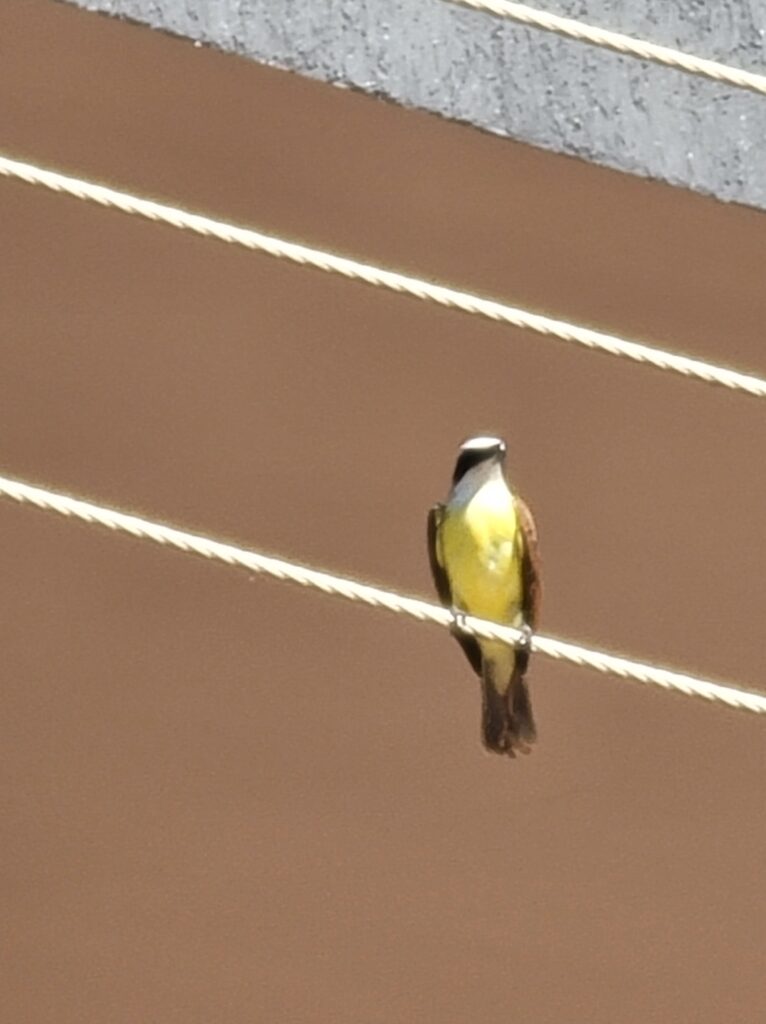
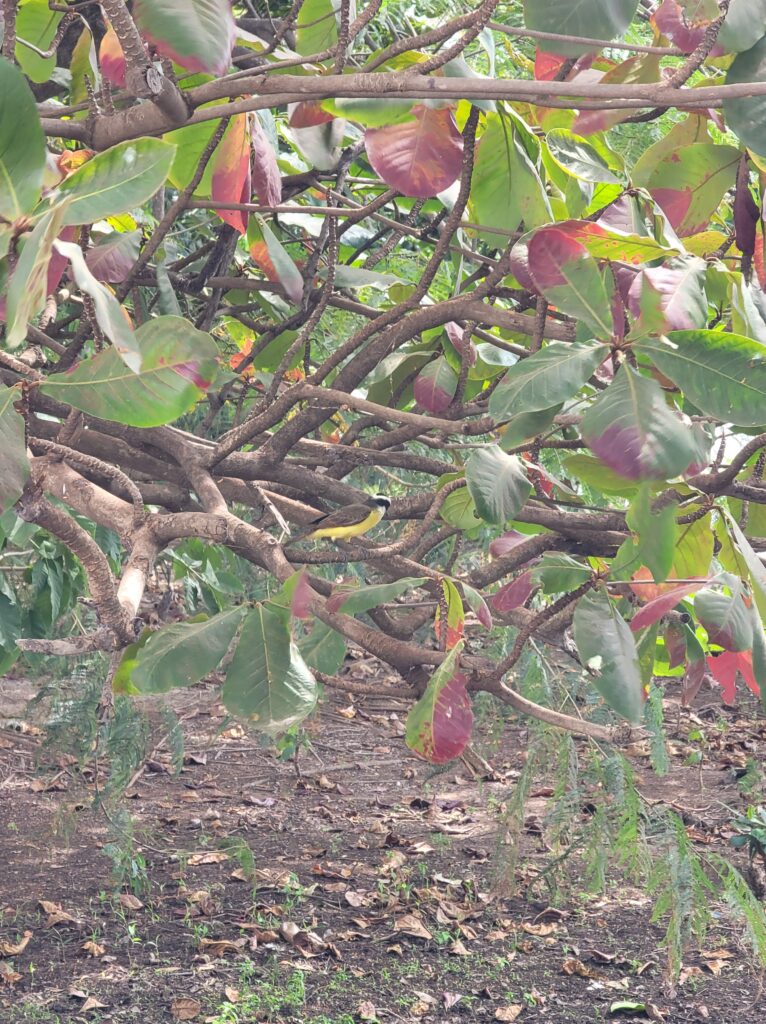
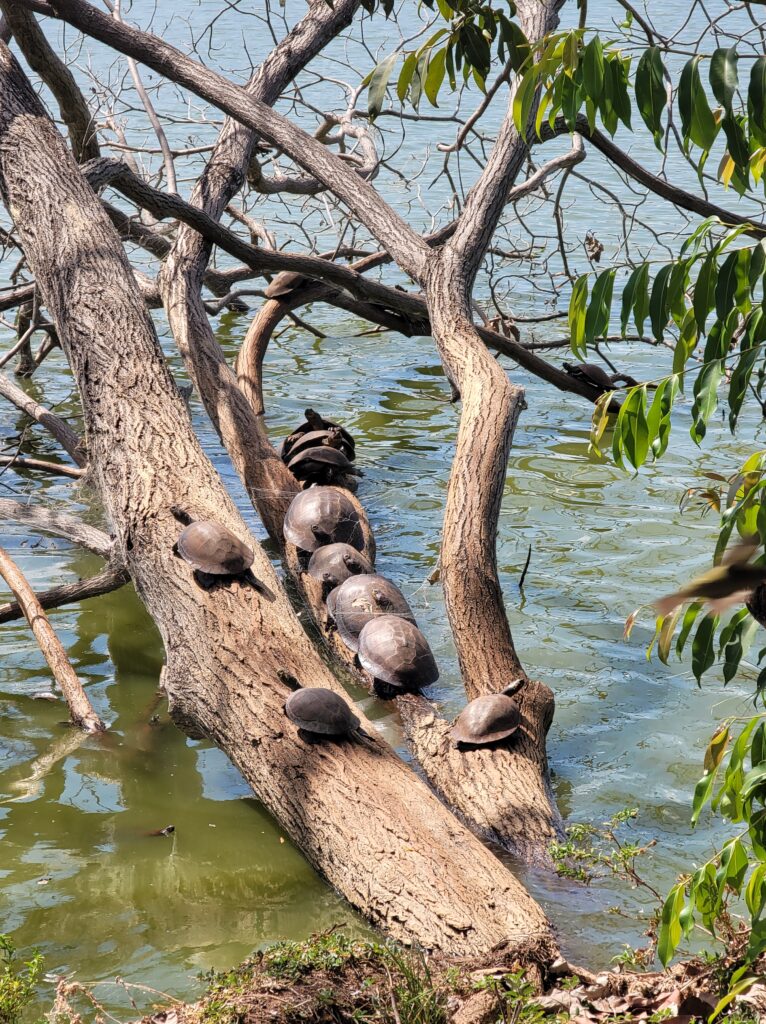
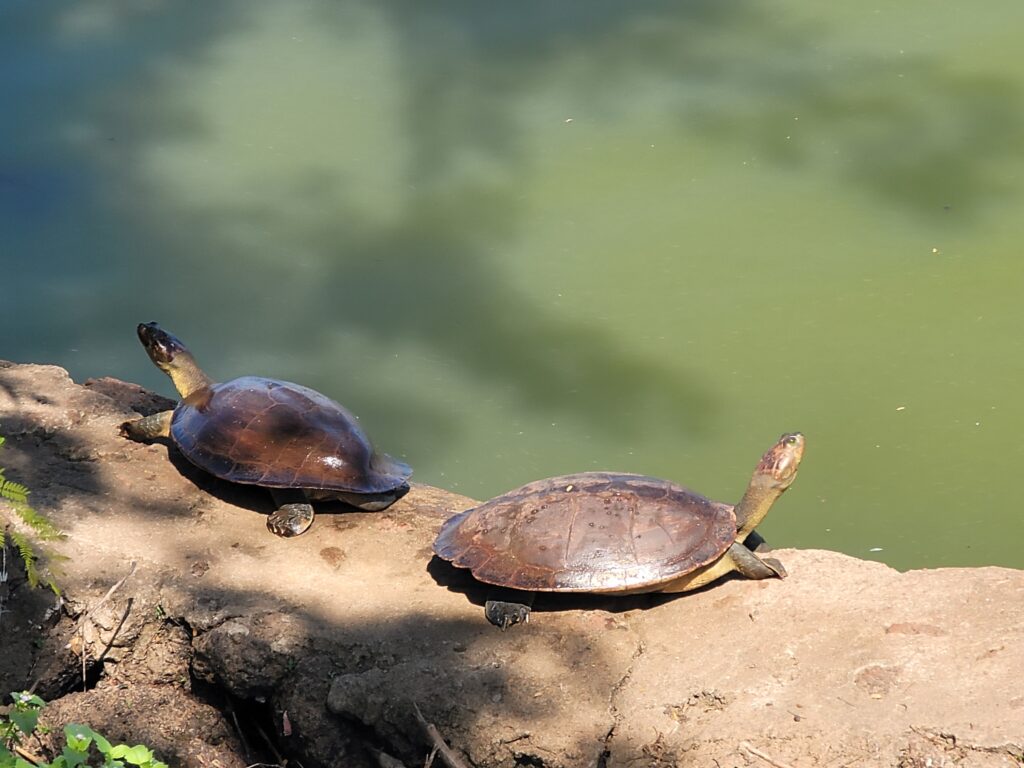
The most common wildlife was birds and turtles.
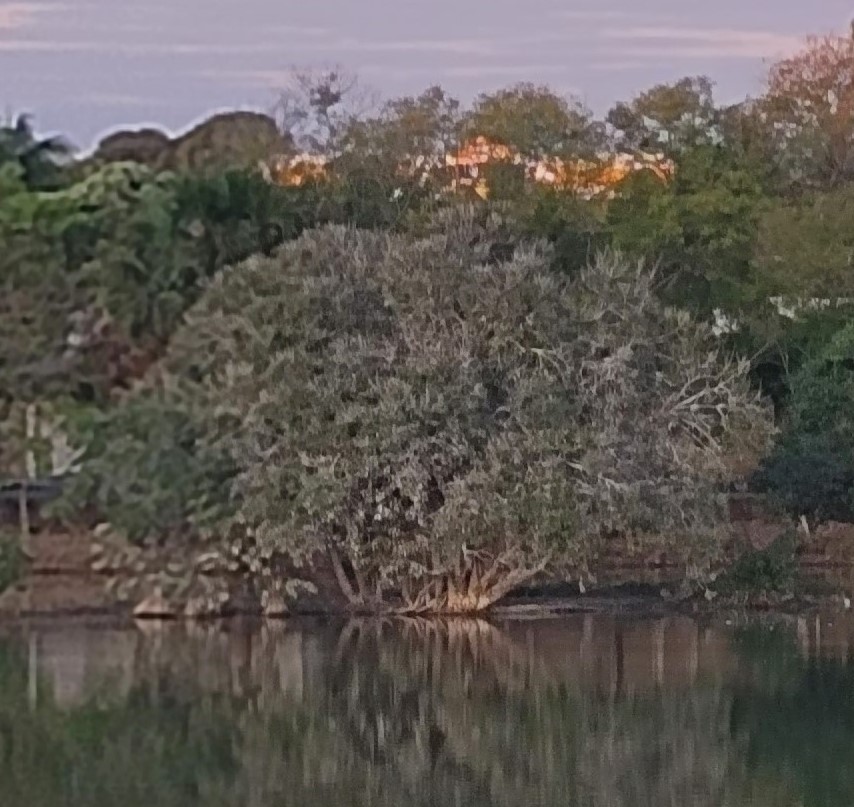
Every morning when I had breakfast, I could see a tree across the lake that was full of egrets. In a period of just 10 minutes, it went from full to empty.
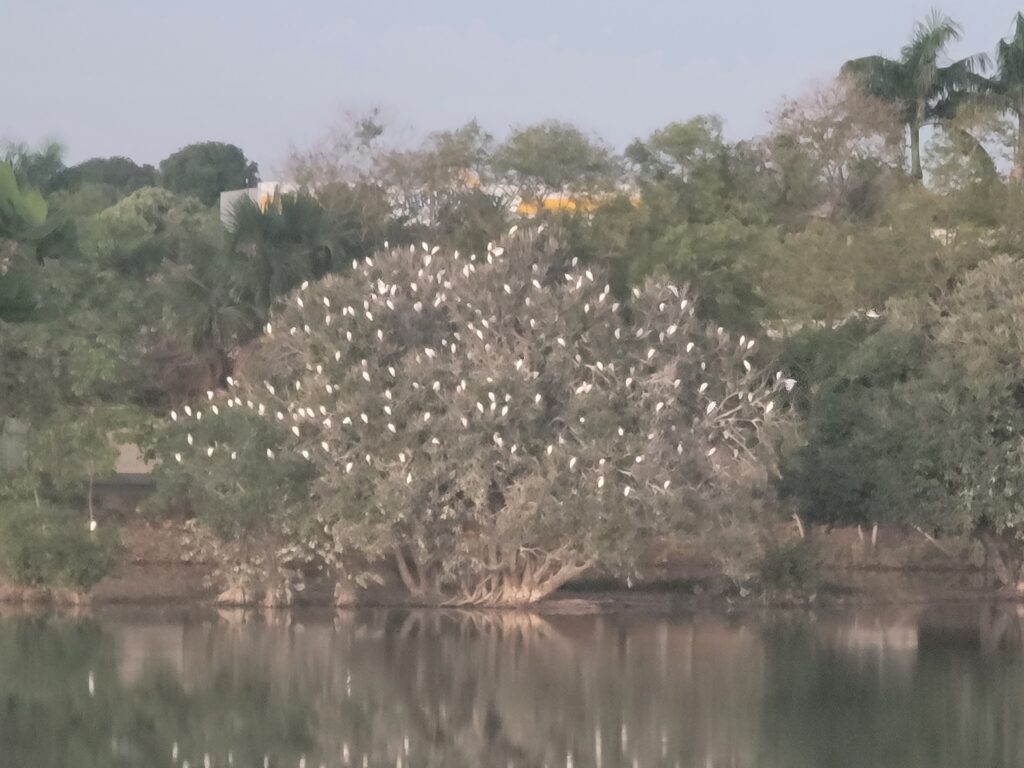
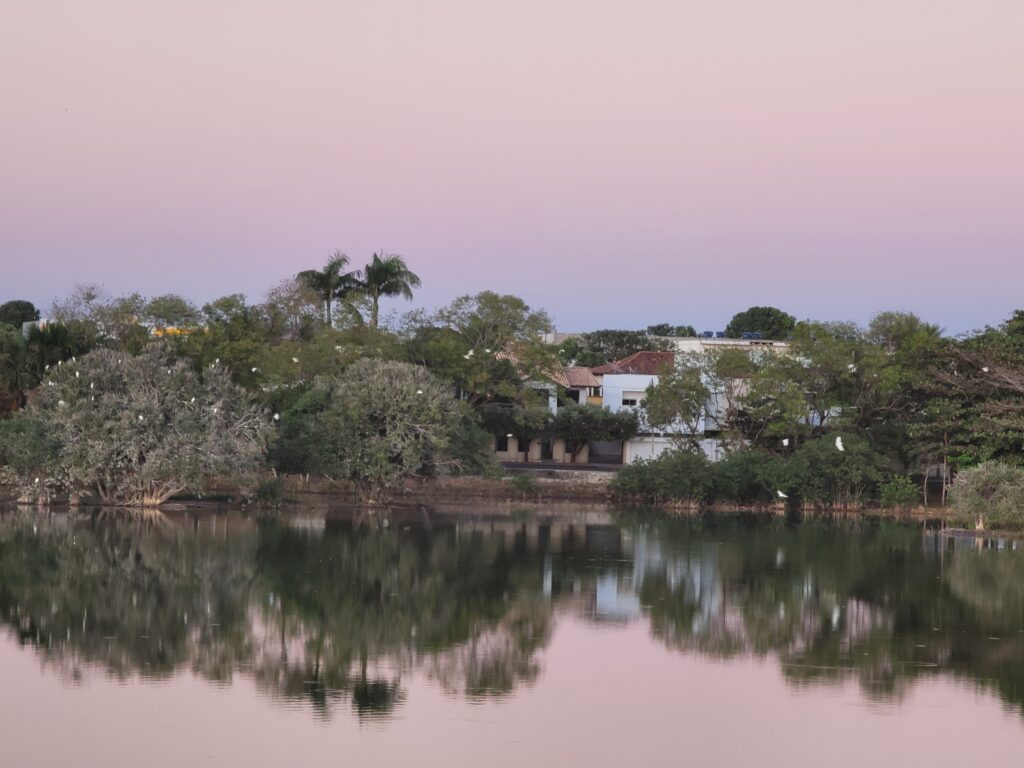
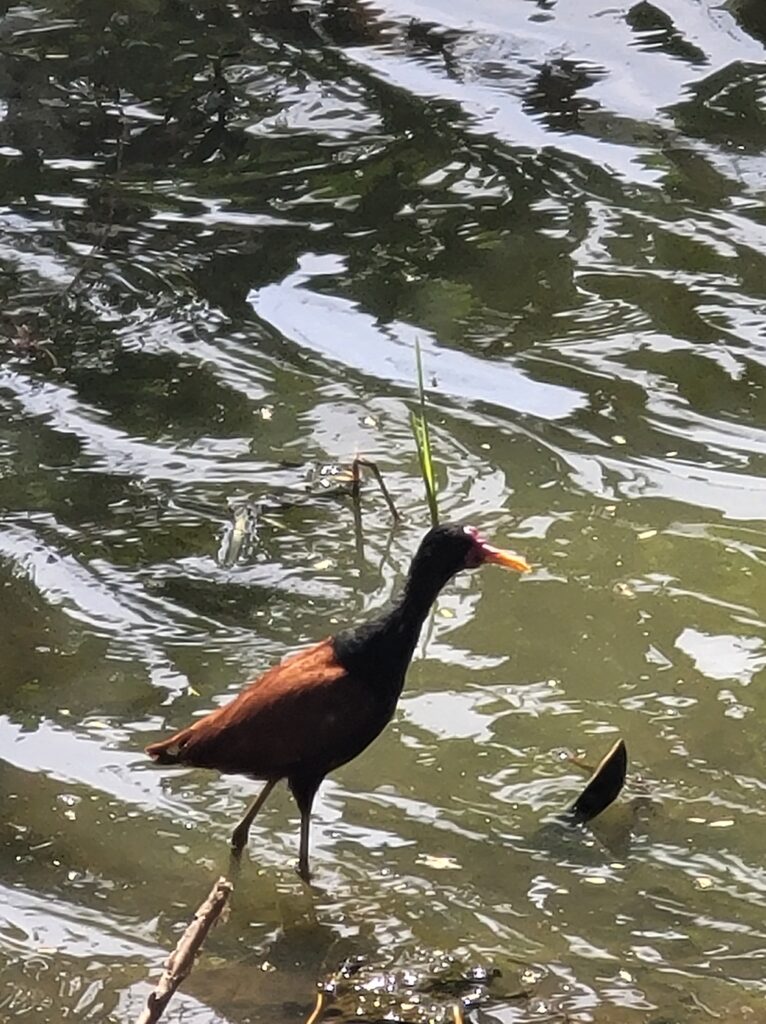
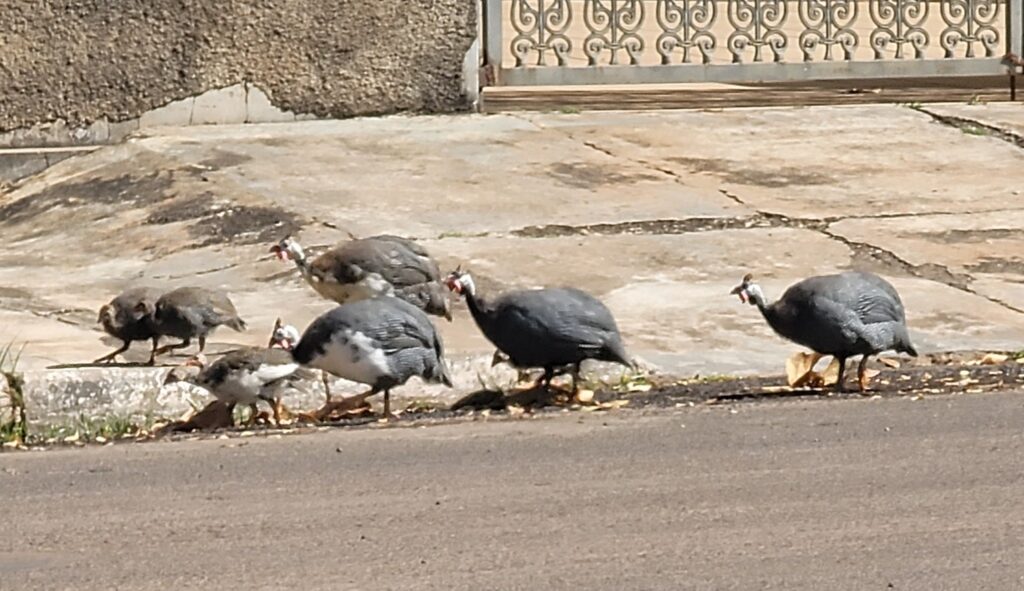
A bird bath:
2. The Food
Actually, this applies to Brazil in general. I will make Porangatu-specific comments at the end of this section.
When I think of food in Brazil, I think of:
- breakfast: fresh tropical fruit and juices, French bread with cold cuts and a style of cheese, known as quejo Minas, cake, and coffee.
- Lunch: I would go to someplace with a fixed plate lunch (prato feito) or a cafeteria, which in Brazil is called “self-service”. The price is based upon the weight of the food you took.
I’m not a big fan of either of these options. Another possibility is to go to a bar and get a “salgado” or a a grilled ham and cheese sandwich (misto quente). A salgado is pastry that is filled with chopped meat or ham or cheese. Generally, they are quite good and inexpensive.
Yet another possibility is to go a specialty restaurant like the one advertised below. It is an all-you-can eat pizza place for less than $8 per person at today’s exchange rate.

- Dinner: Almost everywhere in Brazil, when the sun does down, people and restaurants set up tables and grills outside and prepare espetinhos, which are shish kebab-like spits of meat or sausage or chicken or cheese. They offer them for sale along with feijão tropeiro (tropical beans) and beer or sodas. Before you know it, all the tables are in use and people are socializing and enjoying their dinner.
Feijão tropeiro is beans made with farofa (manioc flour), chopped sausage, collard greens, onions and parsley. It is not unusual that I will skip the espetinhos and just have the feijão tropeiro for dinner.
Another possibility is to go to a restaurant that serves meals a la carte. In big cities, these are common, but I only know one place in Porangatu like this (the Wembley Park Hotel).
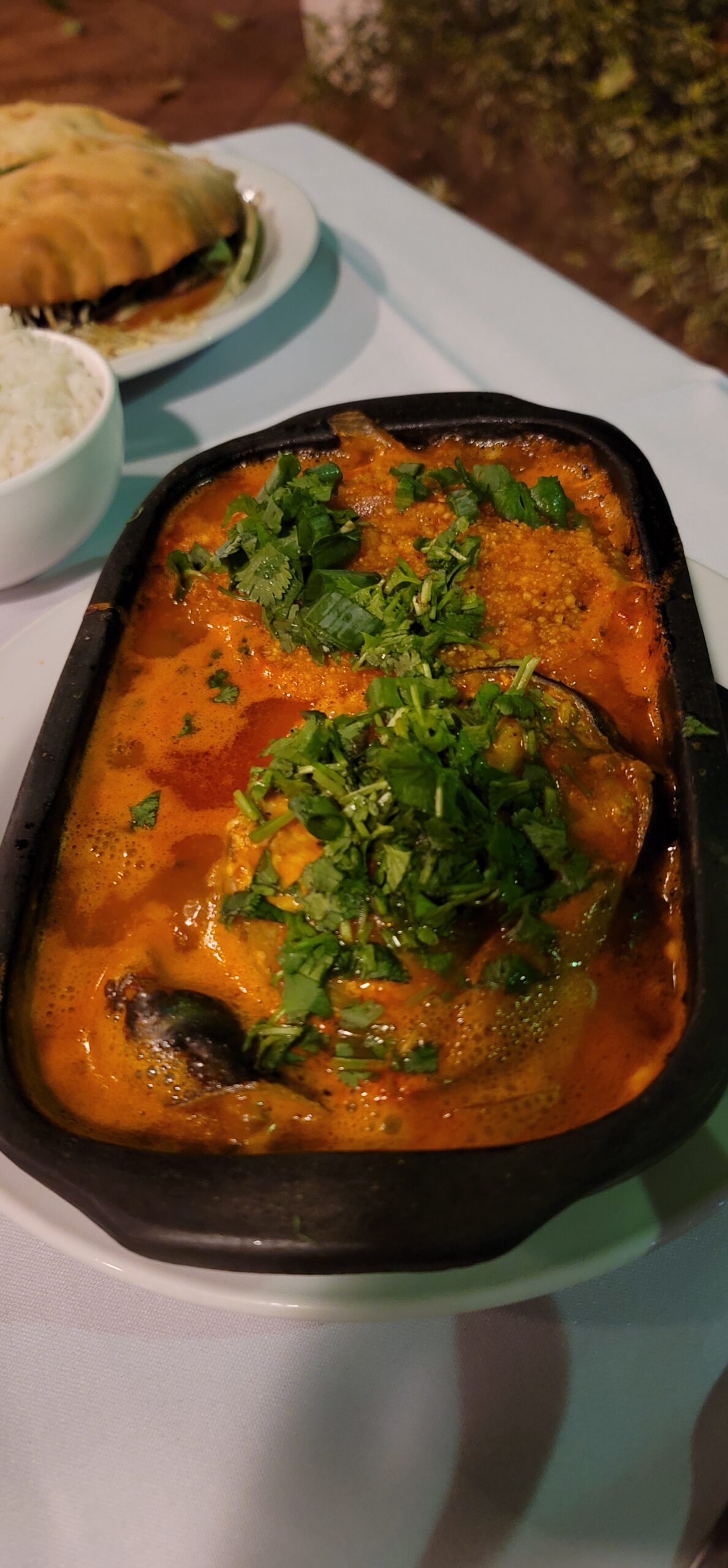
I am especially a fan of muqueca de peixe, which is a fish stew in the style of the State of Espiritos Santos. It is served with rice and pirão which is a gruel made from manioc flour.
- For lunch or dinner, it is also possible to go to a churrascaria rodizio, an all-you-can eat restaurant specializing in meat. However, I don’t know of any such place in Porangatu.
- Drinks:
- fruit juices such as passionfruit juice
- sodas such a guaraná which is flavored with a fruit from the Amazon.
- It’s not common in Porangatu, but in other places in Brazil, tourists are partial to caipirinhas. This is a drink made with cachaça, lime, and sugar and is often quite strong. I think it is fair to say cachaça is a the Brazilian national liquor. It is made from sugar cane. It doesn’t taste anything like rum.
- Brazilians beer generally is light and refreshing. They like their beer ice cold and have mastered the science of getting it as cold as possible without freezing it. The storage refrigerators in bars often have a thermometer showing the internal temperature. It is delicious with an espetinho on a hot night.
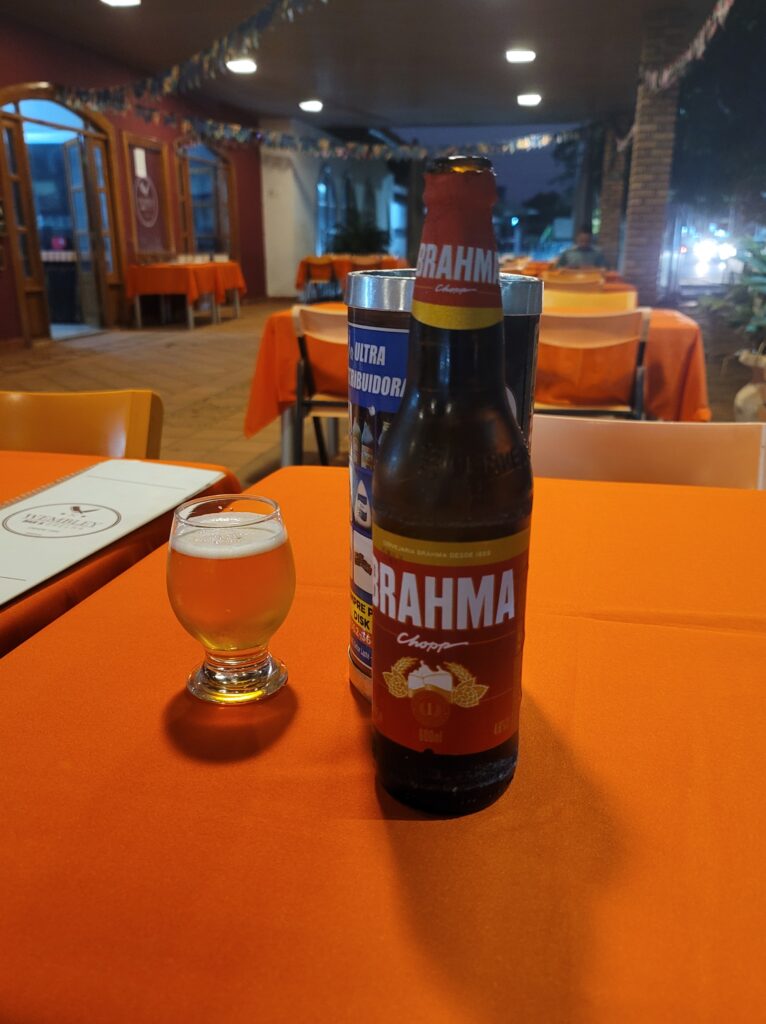
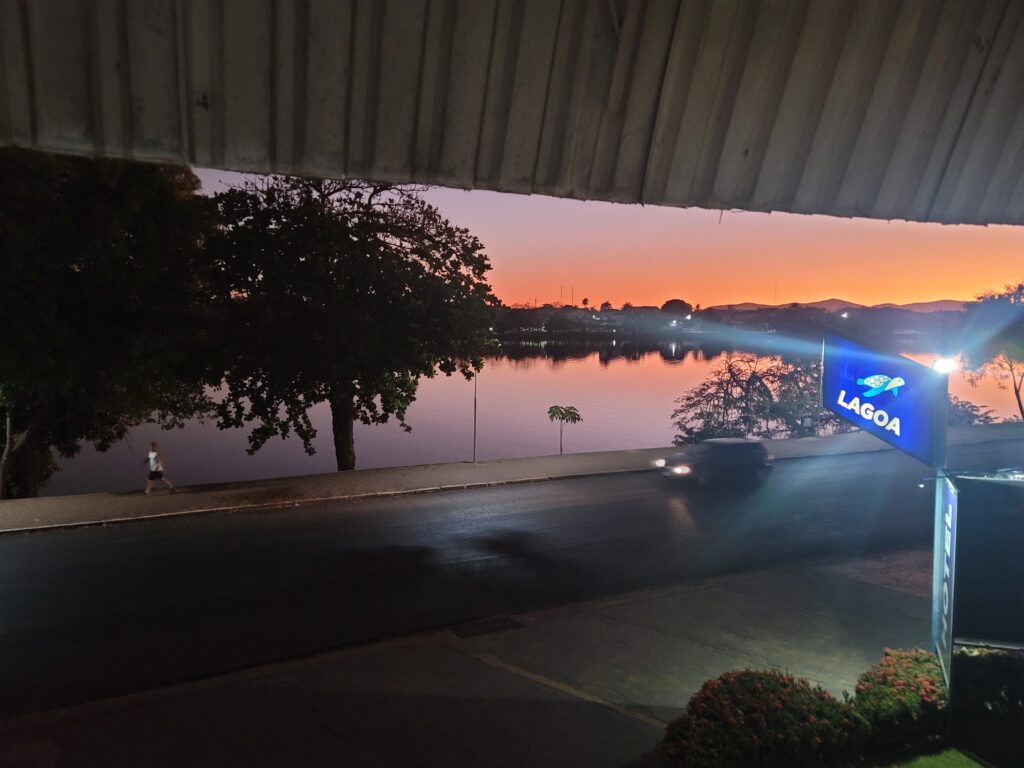
The two hotels I have stayed in recently are the Wembley Park and the Lagoa Hotel. Breakfast at the Wembley Park is good. At the Lagoa Hotel, it is OK, not bad. On the other hand, the Wembley Park costs twice as much as the Lagoa Hotel and is not as conveniently located.
For a muqueca de peixe, I recommend the Wembley Park Hotel. Their restaurant is only open in the evening. I probably eat there at least twice a week when I’m in Porangatu.
The place I like for espetinhos is Lanchonete El Shaday, just south of the Lagoa Hotel. There is another place about equidistance north of the hotel called Lagoa Espeto Bar. It is very popular, but I prefer the more peaceful and less expensive El Shaday.
3. The Low Cost of Living and Visiting
The only reasons I don’t buy a house there and retire there is there is no public airport and no large hospital. I guess a luxurious house with a swimming pool would cost between US$ 50,000 and US$ 100,000.
I am always pleased when I come home from Porangatu to see how little I spent. Dinner usually costs between US$ 5 and US$ 20 with drinks. I live like the natives, walk almost everywhere, use a moto-taxi when I need to travel farther, and pay less than US$ 30 a night with breakfast for my hotel room.
Other Things
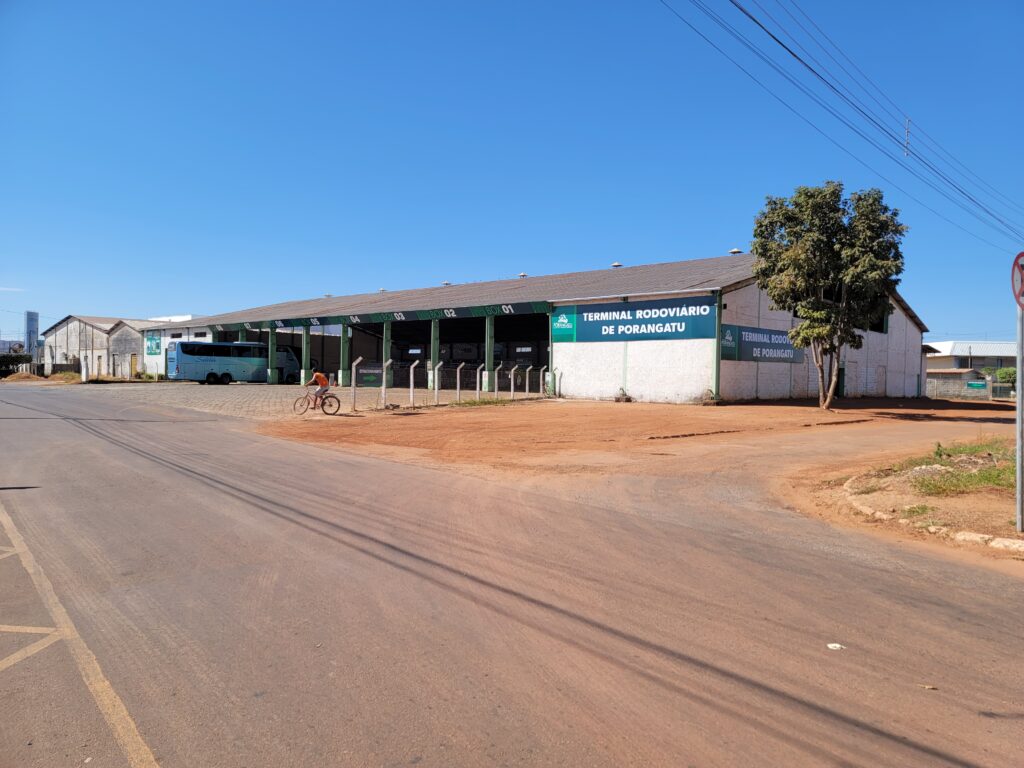
The bus station used to be located on the main street, not far from the center. I have been told that its roof collapsed in a rain storm. The new bus station, shown below, is located an easy walking from the lake and the Lagoa Hotel. Be warned, though, the weather is often hot!
Porangatu is a great place just to watch how the people live. For example, in the video below, a group of men walking blindfolded along lake shore. I asked what was going on. I was told they were firemen in training. Somehow, I doubt it, but it was interesting.
The man with the horse takes him everyday to the sand lot at the edge of the lake and practices with him.
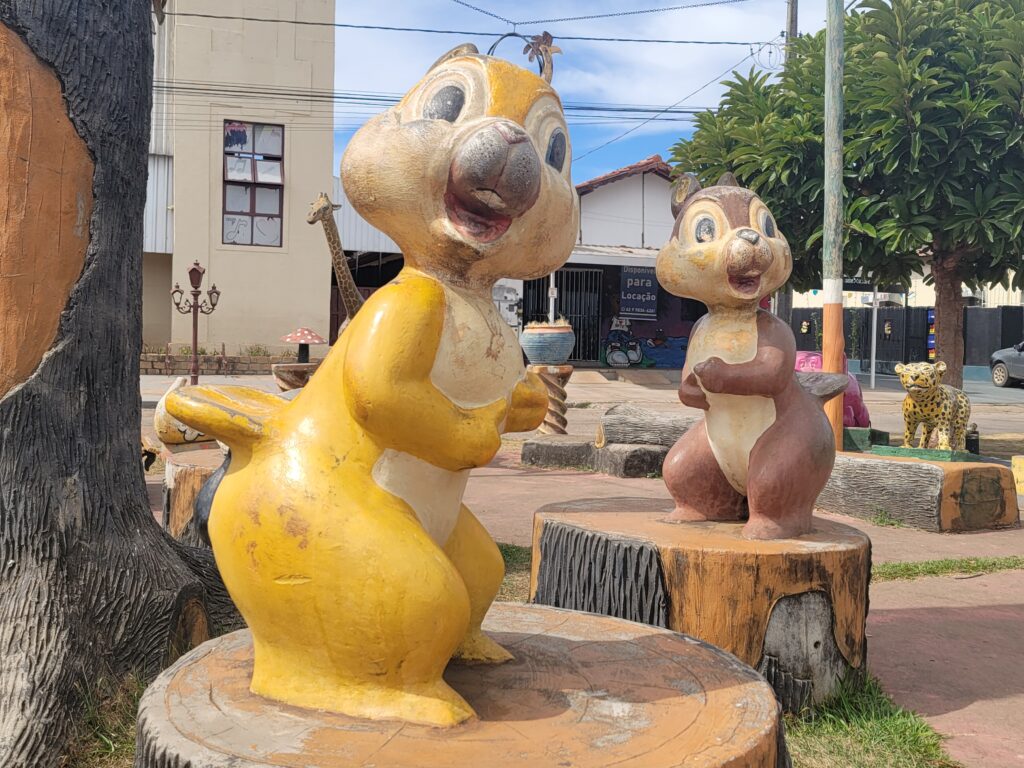
So, do I recommend you visit? Sadly, unless you speak Portuguese, no. I suspect if you went there, did not know your way around and had difficulty communicating with the people, you would find Porangatu a hot and boring city. If, on the other hand, you do speak Portuguese, I consider Porangatu to be a hidden gem.
If enough people make comments that they would like to make a side trip to Porangatu when they are in Brazil, I can talk to some of the people I know there about setting up a tour. However, I think I would have a hard time finding someone who speaks English well enough to guide. Still, if there is enough interest, I can see what I can do.
This is so interesting! I would like to visit Brazil soon! 💕💕💕
I just recently visited Brazil to see my wife’s family, she is Brazilian. I was mainly in Goiana, but, I also visited Minaçu, in northern Goias. I had a great time. I would love to see Porangatu.
I’ve never been to Minaçu, but given its location and a population that is just a bit less than that of Porangatu, I bet it’s a lot like Porangatu was when I lived there 25 years ago. If you like nature and Brazilian food and you speak Portuguese or your wife goes with you, I think you would enjoy Porangatu. If you go, make sure to take a slow walk around the lake and look for the capybaras.